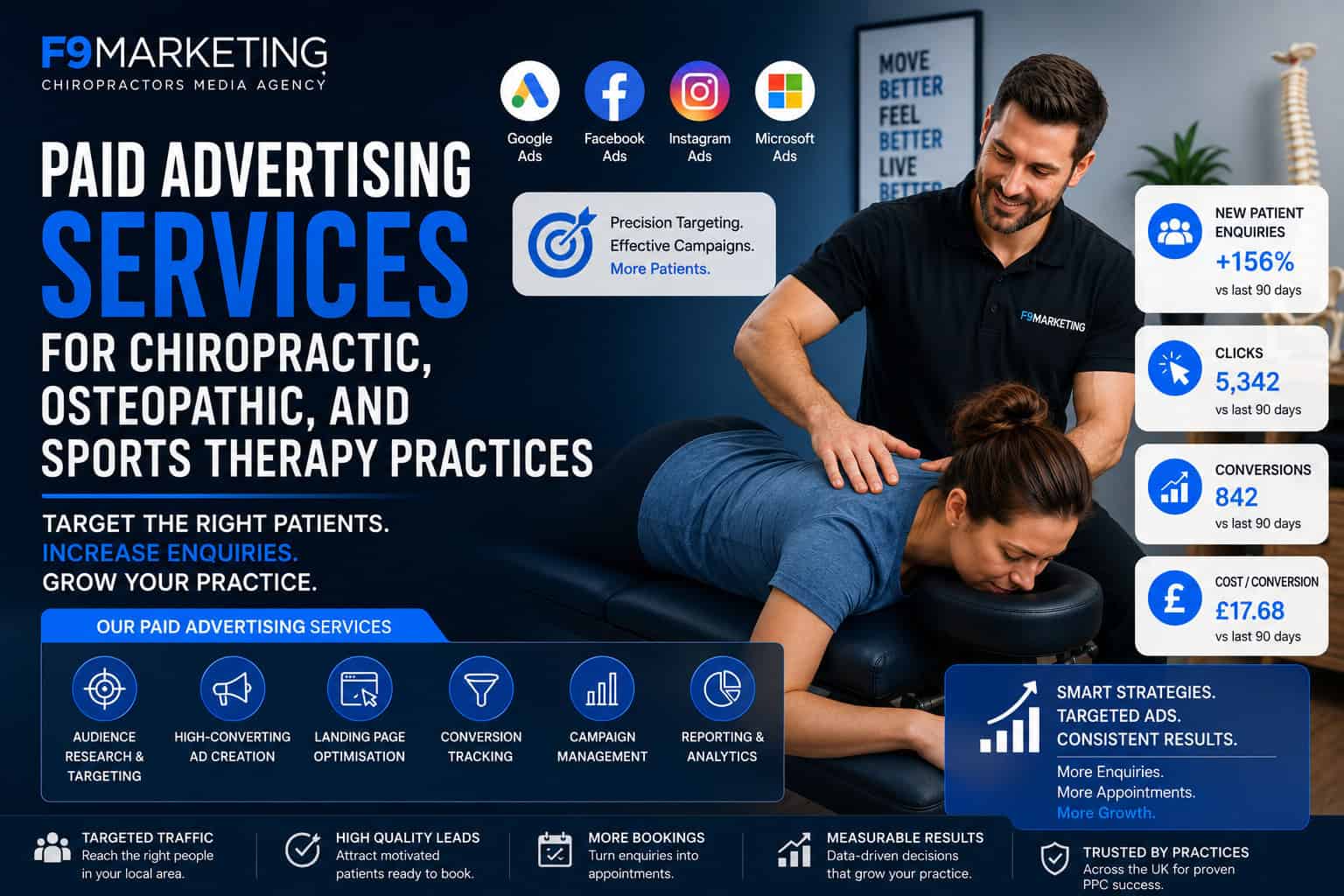
Patient acquisition has become increasingly competitive across private healthcare. Referral networks still matter, but many practices discover that referrals alone create unpredictable growth patterns. Some months are fully booked. Other periods leave gaps in the diary that place pressure on revenue, staffing, and long-term planning.
This is why paid advertising services continue to play a major role in healthcare marketing. They create a direct path between patients actively searching for treatment and practices capable of helping them.
But paid advertising is often misunderstood.
Many clinics assume the goal is simply generating more traffic or increasing visibility. In reality, successful healthcare advertising depends on controlling economics, improving conversion quality, and attracting patients who are genuinely likely to book, attend, and complete treatment plans.
The difference between profitable advertising and wasted spend usually comes down to strategy, measurement, and operational discipline rather than advertising platforms themselves.
Why Paid Advertising Matters for Patient Acquisition
Most healthcare marketing channels operate slowly.
SEO campaigns may take six to twelve months before producing reliable patient enquiries. Organic social media reach is inconsistent. Community networking takes time to compound.
Paid advertising works differently because it targets existing patient intent.
Someone searching for “sports injury treatment near me” or “chiropractor for neck pain” is already moving toward a treatment decision. Paid advertising places a practice directly in front of that decision-making moment.
This timing matters because intent-driven traffic generally converts at much higher rates than interruption-based advertising.
Patients searching Google for treatment options are usually responding to immediate discomfort, urgency, or mobility limitations. That creates shorter decision-making timelines compared to many other industries.
Healthcare benchmark studies regularly show that well-structured search advertising campaigns can achieve landing page conversion rates between 10% and 20%, depending on competition, targeting quality, and message alignment.
Source:
https://theleadingpractice.com/blog/chiropractic-google-ads-benchmarks-2026/
What Paid Advertising Services Typically Include
Search Advertising
Search advertising focuses on patients actively looking for treatment.
This usually involves platforms like Google Ads targeting condition-specific and location-based searches such as:
- Chiropractor for sciatica
- Sports massage clinic near me
- Osteopath for lower back pain
- Sports injury rehabilitation
Search campaigns generally produce the highest-intent traffic because the patient initiates the search.
These campaigns are commonly used for:
- Immediate patient acquisition
- Filling appointment gaps
- Launching new services
- Supporting new practice locations
Display Advertising
Display advertising focuses more on visibility and awareness.
These campaigns show image-based ads across websites, apps, and online platforms.
Display campaigns often work better for:
- Brand familiarity
- Retargeting previous website visitors
- Supporting broader marketing campaigns
However, display traffic usually converts at lower rates than search advertising because user intent is weaker.
Social Media Advertising
Paid social advertising can work effectively for healthcare practices when campaigns focus on education, local visibility, and patient concerns rather than aggressive sales messaging.
Social campaigns often perform best for:
- Promoting specialist services
- Building local awareness
- Supporting remarketing campaigns
- Educating potential patients
However, social traffic often requires stronger nurturing compared to search traffic because users are not actively searching for treatment when they see the ad.
Remarketing Campaigns
Many patients do not book during their first website visit.
Remarketing campaigns allow practices to re-engage visitors who previously viewed treatment pages but left without booking.
This is important because healthcare decisions often involve:
- Trust considerations
- Price comparisons
- Schedule planning
- Treatment research
Remarketing helps maintain visibility during this evaluation process.
The Real Advantages of Paid Advertising Services
Immediate Visibility
Unlike SEO, paid advertising does not require long ranking timelines before generating exposure.
Campaigns can begin producing impressions and enquiries within days.
This makes paid advertising useful for:
- New practices
- New practitioners
- Recently launched services
- Seasonal appointment fluctuations
The speed advantage becomes especially valuable when appointment schedules need stabilising quickly.
Audience Precision
Paid advertising platforms allow detailed audience targeting.
Campaigns can be refined using:
- Geographic targeting
- Search intent
- Device behaviour
- Demographic trends
- Previous website activity
This reduces wasted spend and improves patient relevance.
Scalable Lead Generation
When campaigns produce sustainable patient acquisition economics, budget can often scale gradually.
For example:
- £1,500 monthly ad spend may generate 15–25 leads
- £3,000 may generate 35–50 leads
- £5,000+ may support larger-scale acquisition efforts
Scaling is rarely perfectly linear because competition affects auction pricing, but paid advertising remains one of the few acquisition channels where lead flow can be forecast with reasonable accuracy.
Detailed Performance Measurement
One major advantage of digital paid advertising is measurement transparency.
Practices can track:
- Cost per click
- Conversion rates
- Cost per lead
- Appointment bookings
- Call tracking data
- Patient acquisition cost
- Return on ad spend
This level of measurement improves decision-making compared to traditional advertising channels where attribution is often unclear.
The Economics Behind Successful Paid Advertising
Advertising performance should always be evaluated using profitability rather than vanity metrics.
Understanding Patient Lifetime Value
Example:
- Initial consultation: £85
- Average treatment plan: 5 sessions
- Average treatment revenue: £425
- Additional services and retention: £175
- Total estimated patient lifetime value: £600
This determines the maximum sustainable acquisition cost.
Determining Acceptable Acquisition Costs
Many healthcare practices target patient acquisition costs between 15% and 35% of patient lifetime value.
Using the previous example:
- £600 patient lifetime value
- Target acquisition cost: approximately £90–£210
This is why low click costs alone do not indicate successful advertising.
A campaign with higher click costs may still produce stronger profitability if patient quality and retention rates are higher.
Full Funnel Conversion Thinking
Advertising performance depends on multiple conversion stages.
For example:
- Landing page conversion rate: 12%
- Lead-to-booking rate: 60%
- Show-up rate: 85%
- Treatment acceptance rate: 70%
Small improvements throughout the funnel compound significantly.
This is why successful paid advertising strategies focus on the entire patient journey rather than ad clicks alone.
Common Problems With Paid Advertising Campaigns
Sending Traffic to Generic Pages
One of the most common healthcare advertising mistakes is directing traffic to generic homepages.
Patients searching for a specific condition expect highly relevant information immediately.
Someone searching for “sciatica chiropractor” should land on a page specifically discussing sciatica treatment rather than a broad overview of the practice.
Broad Keyword Targeting
Broad targeting often creates wasted spend.
Common irrelevant searches include:
- Training programs
- Salary research
- Free treatment advice
- DIY rehabilitation information
Negative keyword management is essential for maintaining traffic quality.
Weak Follow-Up Systems
Many campaigns fail because operational systems are inconsistent rather than because advertising itself is ineffective.
Common problems include:
- Missed phone calls
- Slow lead response times
- Poor appointment scheduling
- Weak onboarding processes
Healthcare leads often contact multiple practices simultaneously. Delayed follow-up reduces booking probability significantly.
Focusing Only on Lead Volume
More leads do not always mean better results.
Some keywords generate large volumes of low-quality enquiries that rarely convert into profitable long-term patients.
The important metric is sustainable patient acquisition cost relative to lifetime value.
Realistic Timelines for Paid Advertising Campaigns
Month 1
- Campaign launch
- Keyword testing
- Initial traffic analysis
- Baseline conversion measurement
Performance volatility is common during this phase.
Months 2–3
- Negative keyword refinement
- Landing page optimisation
- Improved targeting
- Better lead quality trends
Months 4–6
- More stable acquisition costs
- Improved conversion consistency
- Stronger quality scores
- Clearer profitability visibility
Months 6–12
- Campaign maturity
- Audience segmentation
- Geographic optimisation
- Long-term scaling opportunities
Practices expecting fully optimised campaigns within a few weeks often underestimate the refinement process required.
When Paid Advertising Services Do Not Work Well
Insufficient Budgets
Highly competitive healthcare markets often require meaningful testing budgets before campaigns stabilise.
Very small budgets can limit data collection and reduce optimisation opportunities.
Weak Patient Retention
If patient lifetime value is too low, acquisition costs become difficult to sustain profitably.
Retention quality directly affects marketing economics.
Generic Positioning
Practices without clear differentiation often struggle with conversion efficiency.
Specific positioning generally performs better:
- Sports rehabilitation
- Pregnancy-related care
- Sciatica treatment
- Runner injury recovery
- Postural correction
Key Metrics That Matter
| Metric |
Why It Matters |
| Cost Per Lead |
Measures enquiry efficiency |
| Cost Per Appointment |
Reflects booking quality |
| Show Rate |
Indicates lead quality and operational performance |
| Patient Acquisition Cost |
Core profitability metric |
| Lifetime Value |
Determines scaling potential |
| Landing Page Conversion Rate |
Measures message alignment effectiveness |
Practical Starting Point for Paid Advertising
Start With One Service Category
Many practices perform better initially by focusing on:
- One high-demand condition
- One treatment category
- One focused landing page
This creates cleaner data and easier optimisation.
Prioritise Tracking Early
Tracking should include:
- Phone calls
- Form submissions
- Appointment bookings
- Lead source attribution
Without accurate tracking, optimisation decisions become unreliable.
Review Search Terms Consistently
Search term refinement remains one of the highest-impact optimisation activities within healthcare paid advertising.
Final Thoughts
Paid advertising services can provide predictable and measurable patient acquisition when campaigns are structured properly.
The strongest campaigns usually succeed because they combine:
- High-intent targeting
- Clear positioning
- Conversion-focused landing pages
- Accurate tracking systems
- Strong operational follow-up
Paid advertising is not simply about increasing visibility. It is about building sustainable acquisition systems that produce profitable long-term patient growth.
Practices that understand patient economics, conversion efficiency, and operational discipline usually achieve far stronger outcomes than practices focused only on clicks or traffic volume.
Ready to grow your business? Contact us for a free initial consultation to find out if we're a good fit.