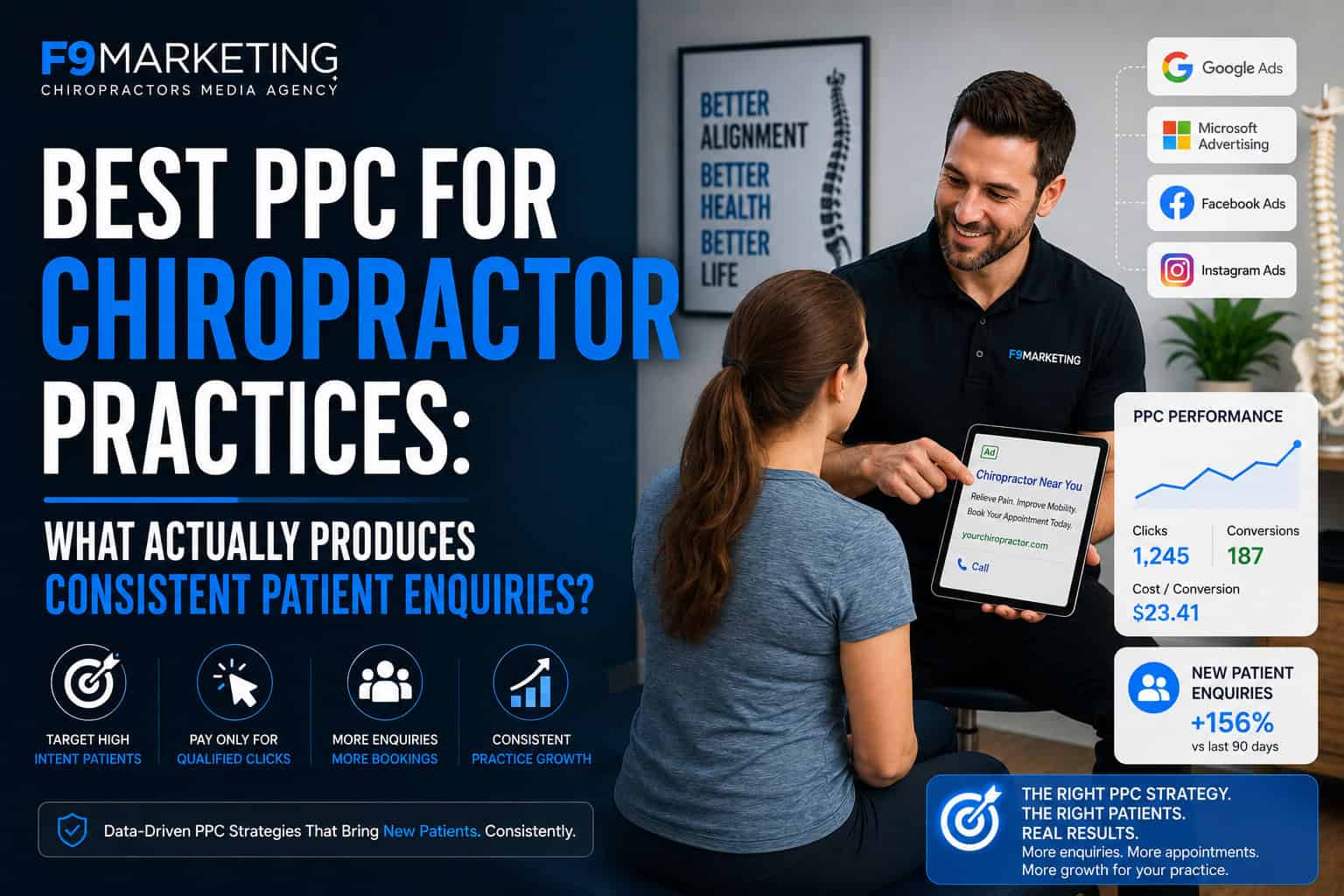
Many chiropractic practices try pay-per-click advertising after hearing that Google Ads can produce
patients immediately. Some campaigns do generate steady enquiries and predictable appointment flow.
Others burn through budget with very little return.
The difference usually has less to do with the platform itself and more to do with how the campaign
is structured, measured, and connected to the rest of the patient journey.
The best PPC for chiropractor practices is rarely the campaign spending the most money or generating
the highest number of clicks. It is the campaign that acquires the right patients at a sustainable
cost while supporting long-term practice growth.
That distinction matters because chiropractic PPC has become increasingly competitive. Search costs
are higher than they were a few years ago, patients compare more practices before booking, and weak
campaign structure wastes budget quickly.
This guide explains how chiropractic PPC actually works, what realistic costs and timelines look
like, where practices lose money unnecessarily, and how to evaluate whether paid advertising is
financially sustainable over time.
Why PPC Matters for Chiropractic Patient Acquisition
PPC works differently from SEO or social media because it captures active intent.
Someone searching:
- “chiropractor near me”
- “back pain chiropractor”
- “sports injury treatment”
- “neck pain chiropractor”
- “sciatica treatment clinic”
is already looking for help.
These are not passive audiences scrolling through content. They are patients actively searching for
treatment options, often while experiencing discomfort.
That intent makes Google Ads one of the fastest acquisition channels available to chiropractic,
osteopathic, and sports therapy practices.
Unlike SEO, which can take months to build visibility, PPC campaigns can begin generating enquiries
within days of launch.
However, speed creates its own problem: inefficient campaigns waste money immediately rather than
gradually.
The Economics Behind the Best PPC For Chiropractor Campaigns
Most chiropractic practices evaluate PPC incorrectly because they focus only on click costs rather
than long-term patient value.
A £10 click initially sounds expensive. But if one acquired patient produces £1,200 in lifetime
revenue, the economics change significantly.
| Metric |
Typical Range |
| Cost per click (CPC) |
£3–£15+ |
| Landing page conversion rate |
8–20% |
| Cost per lead |
£30–£120 |
| Lead-to-booking rate |
25–50% |
| Cost per acquired patient |
£100–£350 |
| Estimated patient lifetime value |
£800–£2,500+ |
The best PPC for chiropractor campaigns are usually measured against lifetime value (LTV), not just
first appointment revenue.
Practices with strong retention can afford higher acquisition costs because patients attend multiple
appointments over time.
Practices with poor retention often struggle with PPC profitability regardless of campaign quality.
What the Best PPC For Chiropractor Campaigns Usually Include
High-Intent Keyword Targeting
Strong campaigns focus on searches with clear treatment intent rather than broad informational
traffic.
Examples include:
- “chiropractor for sciatica”
- “sports injury chiropractor”
- “back pain clinic near me”
- “neck pain treatment chiropractor”
- “same day chiropractor appointment”
These searches typically convert better because the patient is already considering treatment rather
than simply researching symptoms.
Dedicated Landing Pages
One of the biggest mistakes in chiropractic PPC is sending paid traffic directly to the homepage.
Homepages are usually built for multiple audiences simultaneously. PPC landing pages work better
when they focus on one condition, one service, or one patient intent.
Effective landing pages often include:
- Clear explanation of symptoms treated
- Simple appointment booking options
- Mobile-friendly design
- Fast loading speed
- Practitioner credibility signals
- Patient FAQs
- Transparent process explanations
The objective is to reduce uncertainty quickly after the click occurs.
Strong Geographic Targeting
Most chiropractic patients search locally.
Campaigns targeting excessively broad geographic areas often waste budget on users unlikely to
travel for treatment.
The best PPC structures usually focus on:
- Specific towns or suburbs
- Defined travel radiuses
- Areas with stronger demographic fit
- Locations close to the practice
Phone Call Optimisation
Many chiropractic patients prefer calling rather than completing online forms, especially when pain
levels are high or appointments are urgent.
Strong campaigns often prioritise:
- Click-to-call adverts
- Call extensions
- Visible phone numbers
- Fast front-desk response systems
Missed calls frequently become lost revenue in PPC campaigns.
Why Many Chiropractic PPC Campaigns Fail
Broad Match Keywords Without Control
Broad keywords often trigger irrelevant searches.
Examples include:
- chiropractic jobs
- chiropractic school
- free back pain advice
- used chiropractic tables
Without strong negative keyword management, budgets disappear quickly on traffic that never converts
into patients.
Weak Landing Pages
Even high-quality traffic fails when landing pages create friction.
Common issues include:
- Slow mobile performance
- Confusing navigation
- Weak calls to action
- Too much text without clarity
- Missing booking information
Over-Reliance on Discounts
Heavy discount offers often increase lead volume while reducing lead quality.
Extremely low-cost introductory offers may attract highly price-sensitive patients with weak
retention patterns.
Sustainable campaigns usually compete on trust, expertise, convenience, and clarity rather than
aggressive pricing alone.
Poor Follow-Up Systems
Marketing generates opportunities, but operational systems still determine conversion outcomes.
Delayed responses, unanswered calls, and inconsistent front-desk communication frequently reduce PPC
profitability.
Many successful practices aim to respond to new enquiries within:
- 5–15 minutes during clinic hours
- Under 1 hour whenever possible
Google Ads vs Local SEO for Chiropractors
PPC Produces Faster Results
Paid advertising can generate patient enquiries relatively quickly once campaigns launch.
This makes PPC attractive for:
- New practices
- Clinics with inconsistent patient flow
- Practices expanding services
- Clinics entering competitive markets
SEO Produces Compounding Returns
Local SEO usually takes longer to produce meaningful visibility but creates long-term organic traffic
without ongoing per-click costs.
Strong chiropractic marketing strategies often combine:
- PPC for immediate patient flow
- SEO for long-term stability
- Content marketing for authority building
- Review generation for trust signals
Realistic Timelines for PPC Performance
First 30 Days
Initial campaigns are usually inconsistent.
Early optimisation focuses on:
- Keyword refinement
- Search term analysis
- Landing page adjustments
- Advert testing
- Audience targeting improvements
Immediate profitability is possible but should not be assumed.
Months 2–4
More stable patterns typically emerge during this period.
Campaigns begin identifying:
- Higher-converting keywords
- More profitable demographics
- Better-performing adverts
- Lower-quality traffic sources
Months 4–12
Long-term optimisation becomes increasingly important.
Sustainable PPC campaigns improve gradually through:
- Better conversion rates
- Improved targeting
- Stronger retargeting
- Higher patient retention
- More accurate data collection
When PPC Does NOT Work Well for Chiropractors
Weak Retention Models
Practices where most patients attend only once often struggle to maintain profitable acquisition
costs.
Very Small Budgets
PPC optimisation depends on data volume.
Extremely limited budgets may generate too little traffic for meaningful campaign learning.
| Practice Type |
Typical Monthly PPC Budget |
| Single practitioner |
£500–£1,500 |
| Established clinic |
£1,500–£5,000 |
| Multi-location practice |
£5,000+ |
Outdated Websites
PPC traffic rarely converts consistently on websites with:
- Poor mobile usability
- Slow page speed
- Weak trust signals
- Complicated navigation
- Unclear booking processes
Measurement Frameworks for Chiropractic PPC
Clicks alone are not meaningful performance indicators.
The best PPC for chiropractor campaigns are measured using profitability-focused metrics.
Cost Per Lead (CPL)
Measures the cost required to generate one enquiry.
Cost Per Acquired Patient (CPA)
One of the most important metrics.
Total Ad Spend ÷ Number of New Patients
Lead-to-Booking Conversion Rate
Measures operational effectiveness after enquiries arrive.
Patient Lifetime Value (LTV)
Determines how aggressively a practice can scale advertising sustainably.
Return on Ad Spend (ROAS)
Helps evaluate whether campaigns remain financially viable over time.
A Practical Starting Point for Chiropractic PPC
Step 1: Improve Website Conversion First
Ensure the website is mobile-friendly, fast-loading, and designed around easy appointment booking.
Step 2: Focus on High-Intent Keywords
Prioritise searches with strong treatment intent rather than broad informational traffic.
Step 3: Build Dedicated Landing Pages
Match landing page messaging closely to the keyword and advert being targeted.
Step 4: Implement Conversion Tracking
Track calls, forms, and appointment enquiries accurately before scaling spend.
Step 5: Optimise Gradually Over 90–180 Days
Strong PPC campaigns improve through continuous refinement rather than immediate aggressive scaling.
The best PPC for chiropractor practices is rarely built around shortcuts or aggressive promises.
Sustainable performance usually comes from disciplined targeting, accurate measurement, strong
patient retention, and steady optimisation over time.
Ready to grow your business? Contact us for a free initial consultation to find out if we're a good fit.